Research Strategy (Framework)
The development of the WiseTrap project follows a structured and iterative research strategy based on modern software engineering practices. This strategy is essential to ensure systematic planning, controlled development, and continuous improvement of the system.
The project adopts the Software Development Life Cycle (SDLC) as a foundational model, which includes the following phases: planning, requirements analysis, system design, implementation, testing, deployment, and maintenance. These phases provide a structured approach to ensure that the system is developed in alignment with functional and non-functional requirements.
Given the dynamic nature of cybersecurity threats and the continuous evolution of attack techniques, traditional linear models such as Waterfall are not suitable for this project. Instead, an Agile-based methodology is adopted to support flexibility, iterative development, and continuous feedback.
Among Agile methodologies, Scrum has been selected as the core development framework for WiseTrap. Scrum enables the project to be divided into short iterative cycles (sprints), each delivering incremental improvements to system components such as honeypot modules, logging mechanisms, and dashboard features.
Scrum also ensures continuous collaboration, transparency, and adaptability through structured roles and ceremonies, including sprint planning, daily stand-ups, sprint reviews, and retrospectives.
This methodology allows WiseTrap to evolve continuously in response to new web-based attack patterns and security requirements.
Scrum Framework
The WiseTrap development process is based on the Scrum framework, which enables iterative and incremental delivery of system features.
Each sprint focuses on improving specific parts of the system, such as:
- Honeypot core engine
- Attack logging system
- Vulnerability modules (SQL Injection, Information Disclosure)
- Dashboard and visualization components
Scrum ensures continuous improvement through regular feedback and evaluation cycles.
Scrum Process Diagram
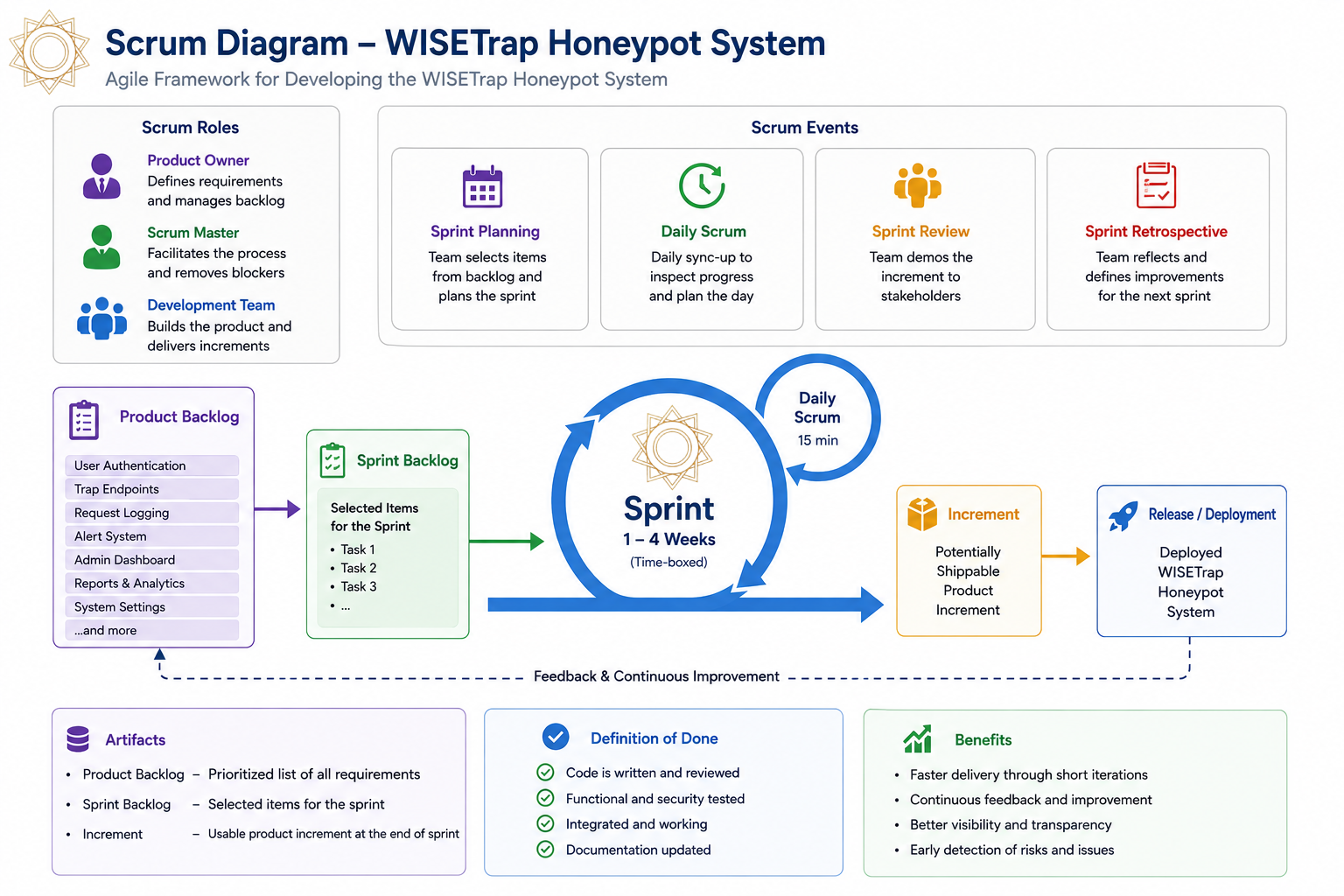
Source: WiseTrap Scrum Diagram Wiki